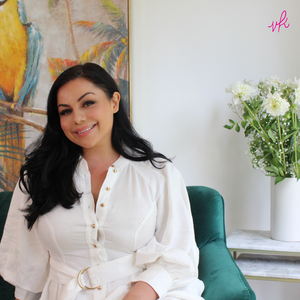
What Every Woman Needs to Know About Heavy Periods - one for men as well, we can’t do this without all our humans, we’re in this together.
By Héma Prakash, Co-founder & CEO, Ponti Health
(I am not a medical professional by any stretch of the imagination, I am a woman sharing my personal perspectives and experiences.The views, opinions, and experiences expressed in this article are entirely my own and do not constitute medical advice, diagnosis, or treatment recommendations of any kind. This is not intended to guide, influence, or direct anyone's healthcare decisions or actions.For all/any health concerns, questions, or decisions, please consult with qualified healthcare professionals who can assess your individual circumstances and provide appropriate medical guidance.)

Why Women Stay Silent (And Why That Needs to Change)
We need to talk about why intelligent, educated, otherwise assertive women suffer silently through years of heavy periods. Because until we understand the why, we can't fix the problem. Women are conditioned from our first period to suffer silently, minimise our pain, manage alone, and push through.
We hear these messages so consistently, from so many sources, for so many years, that they become our internal voice. We stop questioning whether periods are supposed to hurt this much. We just accept that they do and that we're supposed to handle it.
But it's not just cultural conditioning. It's also a medical reality.
Here's something that should enrage you: until recently, most medical research excluded women of childbearing age. That means many treatments, medications, and diagnostic criteria were developed based primarily on male bodies. Women's health—particularly reproductive health—has been historically underfunded and understudied. We're only now beginning to properly understand adenomyosis, endometriosis, peri menopause and PCOS. This research gap means doctors often lack training in recognising and treating these conditions. They weren't taught it in medical school. It is not always dismissiveness—sometimes it's a genuine lack of knowledge in the field.
Standard GP appointments for new patients are 15-20 minutes. In that time, a doctor is supposed to hear your symptoms, perform an examination, order tests, explain findings, and discuss treatment options. What the actual!?
The tried and tired healthcare system's time constraints contribute to women not getting proper care.
Our bodies are complex, and the appointment-based modality that makes up the overwhelming majority of GP appointments in Australia is not geared toward healthful outcomes. Medicare has 6-minute time slots. What in God's name is that? There are Medical Practices that pride themselves on seeing 6 patients an hour. That is an affront, an utter disgrace to clinicians and patients.
This needs to change.
Heavy periods are not normal. Pain that affects your daily life is not normal. Bleeding that restricts your activities is not normal. Women shouldn't have to bleed at work, miss months of activities, or suffer in silence for years before they're taken seriously.
The conversation needs to shift from "can you cope?" to "should you have to?"
How to Get Help (The Guide I Needed Eight Years Ago)
If you've recognised yourself anywhere in this story, here's your action plan. Print this out. Follow it step by step. Don't do what I did.
Step 1: Track Everything (For 2-3 Cycles)
I know tracking feels like one more burden when you're already exhausted. But detailed tracking is the difference between "my periods are heavy" (which doctors hear constantly) and "here's documented evidence of a medical problem" (which gets action).
Track daily: flow level, how often you change protection, type of protection used, clots (how many, how large), pain level (1-10 scale, multiple times daily), other symptoms (fatigue, mood, digestive issues, headaches), activities affected (work missed, exercise skipped, social events cancelled).
Use an app or track it in your calendar or notes on your phone. Note times when you bleed through.
This documentation transforms a subjective complaint into objective data that helps when you speak to your doctor.
Step 2: Prepare For Your Medical Appointment
Write everything down before the appointment. In the moment, it's easy to minimise or forget details.
Things to bring: Your tracking data (minimum 2-3 months). List of all current medications and supplements.
Family history of gynaecological conditions. List of symptoms, including ones that seem unrelated. How your periods affect your daily life (be specific about activities avoided, work missed, life changes made).
Step 3: Be Radically Specific
This is crucial. Don't minimise. Don't soften. Don't worry about being "dramatic."
Instead of "My periods are quite heavy," say "I change a super absorbency tampon and a pad every 90 minutes for the first three days of my period. I bleed through overnight protection 2-3 times per cycle despite using the heaviest products available."
Instead of "They're painful," say "The pain is 8/10 on the first two days. It's severe enough that I can't concentrate at work, and I've used all my sick leave in the past year for period-related issues."
Instead of "They affect my life a bit," say "I've stopped going to the gym, swimming, and wearing light-coloured clothes during my period. I plan my work and my travel around my cycle. I've declined social invitations I wanted to attend because I was worried about bleeding through."
Quantify everything.
Step 4: Request Appropriate Investigation
Your doctor may order blood tests (checking for anaemia, iron studies, thyroid function, and other markers depending on age and symptoms), imaging (pelvic ultrasound as first line, MRI if ultrasound findings are unclear or if deep endometriosis is suspected), and referrals (gynaecologist for specialised assessment, endocrinologist if complicated hormonal issues is suspected, haematologist if bleeding disorder is suspected).
If your doctor suggests "wait and see" without investigation, push back. Ask explicitly: "What conditions are we ruling out before deciding to wait?"
Step 5: Know the Potential Causes
Understanding what might be causing heavy bleeding helps you have informed discussions with your doctor.
Structural causes include fibroids (benign growths in the uterus muscle, very common), adenomyosis (uterine lining tissue growing into the muscular wall—my diagnosis), endometriosis (tissue similar to uterine lining growing outside the uterus), polyps (small growths on the uterine lining), and, in rare cases, cancer.
Hormonal causes include PCOS (a hormonal disorder causing irregular, sometimes very heavy periods), thyroid disorders (both hyperthyroidism and hypothyroidism affect bleeding), and perimenopause (erratic hormone levels causing unpredictable heavy bleeding).
Blood-related causes (not necessarily common) include Von Willebrand disease (the most common bleeding disorder, often undiagnosed), platelet disorders, and certain medications (blood thinners, anti-inflammatories).
Other causes include IUD complications (copper IUDs can increase bleeding), pelvic inflammatory disease, and cervical or uterine infections.
Most of these conditions are treatable. But you can't treat what you don't diagnose.
Step 6: If You're Dismissed, Get a Second Opinion
This is crucial: You know your body. You know when something isn't right.
If a doctor dismisses your symptoms without investigation, suggests it's "just stress" without ruling out medical causes, recommends "wait and see" without a clear timeline or plan, makes you feel like you're overreacting, or doesn't take your quality of life concerns seriously—get a second opinion. Find a doctor who will take the time to listen and investigate.
Your quality of life matters. Your symptoms are valid. You deserve to be heard and taken seriously.
Step 7: Understand Your Treatment Options
Once you have a diagnosis, multiple treatment pathways usually exist.
Medical management options include hormonal treatments (including the oral contraceptive pill and a Mirena IUD) and non-hormonal medications (tranexamic acid, NSAIDs, and iron supplementation).
Surgical options range from conservative uterus-sparing procedures (endometrial ablation, myomectomy, uterine artery embolisation, hysteroscopic procedures) to definitive treatment (hysterectomy, which can be partial or total, with ovaries usually retained unless there's a specific indication to remove them).
Complementary approaches like pelvic physiotherapy, dietary support, sleep and stress management can support your overall health, though they're not replacements for medical treatment.
The right treatment depends on the underlying cause, your age, whether you want to maintain fertility, the severity of your symptoms, your preferences and values, other health conditions, and your previous treatment responses.
You should be presented with options and be part of the decision-making process. This is your body and your life.
I opted for the Mirena - I did want a partial hysterectomy, but I didn't have time for it with the opening of Ponti Health and all that followed. I don’t know if the Mirena has worked; it is certainly better than it was before I had it. We will know in time.
Think of your GP relationship as a genuine partnership. You're the expert on you - how you feel, what's changed, what matters most. They're experts in medical science with years of study and experience. When you face uncertainty together, trusting each other's expertise and leaning on one another, that's where the best care lives.
The Integrated Care Difference
Here's what I learnt from my eight years of suffering: treating heavy bleeding effectively requires more than just addressing the bleeding.
When I finally got proper care, it wasn't just about stopping the bleeding. It was about physical health restoration (treating the anaemia, addressing nutritional deficiencies, managing pain properly, restoring energy and stamina), hormonal health optimisation (understanding the hormonal factors especially if PCOS or thyroid issues present, managing perimenopausal symptoms if relevant), mental health support (addressing the low-level anxiety that developed, processing the frustration, managing 'low days'), lifestyle factors (gradually returning to exercise, nutritional support for recovery, sleep optimisation, stress management), and practical support (understanding how to track symptoms, knowing when to seek urgent care, having a plan for managing flare-ups, connecting with other women facing similar challenges).
This is why I founded Ponti Health. Because I experienced first-hand what happens when healthcare is fragmented.
That is why our model is different. We have an integrated team approach with GPs who specialise in women's health, gynaecologists for surgical expertise, endocrinologists for hormonal optimisation, psychiatrists and psychologists for mental health support, physiotherapists for pain and pelvic floor health, Clinical Sex Therapists and iron infusions—all under one roof, all communicating with each other, all working together on your care plan.
We offer time and attention with longer appointments (because 20 minutes isn't enough for complex women's health issues), thorough investigation (we don't guess, we test), comprehensive treatment plans (addressing root causes, not just symptoms), and regular follow-up (we don't discharge you once the bleeding stops).
We provide evidence-based, compassionate care using the latest research and best practices, presenting treatment options clearly with pros and cons.
This is the care I needed eight years ago. This is the care every woman with heavy periods, endometriosis, PCOS, peri menopause deserves.
Life on the Other Side (It's Worth Fighting For)
I'm sitting at Ponti with the phones ringing, patients in and out as I finish writing this, wearing white linen (head to toe, might I add). I am planning a beach dip this afternoon. And above all else, I don't actually know where my emergency/rescue pack is.
These small things—white clothes, beach dips, spontaneous plans—probably sound trivial to someone who's never had to give them up. But to me, they represent freedom from the prison I didn't realise I'd built around myself for eight years.
What's different now: I swim whenever I want. I go to the gym consistently. I travel without fear. I wear whatever I want. I have energy—real energy. My hair is growing back. The anxiety has quieted.
But there's grief too.
I grieve for the eight years I lost. The beach dips I missed. The gym sessions I skipped. The confidence to wear my wardrobe. The mental and emotional energy consumed by "managing" something that required medical treatment, not better time management.
I grieve for the woman I was, standing on that stage bleeding through her clothes, too embarrassed to admit she needed help.
I grieve for all the women who are living that story right now.
And that grief has become fuel.
It's why I founded Ponti Health. It's why I'm writing this article with such raw honesty. It's why I'm willing to share something deeply personal and frankly embarrassing.
Because if my story—my eight years of unnecessary suffering—can convince even one woman to seek help sooner, to be more specific with her doctor, to push back against dismissal, to refuse to accept "just learn to live with it" as an answer...
Then maybe those eight years weren't entirely wasted.
To Every Woman Reading This
If you've recognised yourself in my story—if you're changing tampons constantly, bleeding through regularly, avoiding activities, exhausted all the time, organising your life around your cycle—please hear this:
You don't need to wait for your stage moment.
You don't need a public haemorrhage. You don't need to hit rock bottom. You don't need to prove your suffering is "bad enough" to deserve attention.
You deserve help right now. Today. Not when it gets worse.
Your period shouldn't dictate your life. Your pain is not "normal." Your exhaustion is not something you just have to push through. Your loss of activities and confidence is not something you should accept.
This is treatable. You don't have to live like this.
Make the appointment. Track your symptoms. Be radically specific when you describe what's happening.
Don't minimise. Don't soften your language. Don't worry about being "dramatic."
If your doctor dismisses you, find another doctor. And another. Keep going until someone listens.
Your quality of life matters.
Your pain matters. Your exhaustion is real. The life you've given up—the activities, the confidence, the spontaneity—you can get that back.
Don't do what I did. Don't wait eight years.
The white linen is waiting for you, too.
A huge thank you to my incredible team of current physicians, Dr Anna Connellan (GP), Dr Juman Farjo (Gynaecologist) , and Nurse Isabella Goodman (iron infusions). And to the OG team, whom I am so grateful for getting me on my journey. Dr Claudia Lee (GP) & Dr Talat Uppal (Gynaecologist).Above all, my desperately patient other half who waited for the penny to drop and leaned into my moments without dictating, when he very well could have.
(I am not a medical professional by any stretch of the imagination. I am a woman sharing my personal perspectives and experiences. The views, opinions, and experiences expressed in this article are entirely my own and do not constitute medical advice, diagnosis, or treatment recommendations of any kind. This is not intended to guide, influence, or direct anyone's healthcare decisions or actions. For all/any health concerns, questions, or decisions, please consult with qualified healthcare professionals who can assess your individual circumstances and provide appropriate medical guidance.)
Ready to Get the Help You Deserve?
This is why I founded Ponti Health. Because I experienced first-hand what happens when healthcare is fragmented.
That is why our model is different. We have an integrated team approach with GPs who specialise in women's health, gynaecologists for surgical expertise, endocrinologists for hormonal optimisation, psychiatrists and psychologists for mental health support, physiotherapists for pain and pelvic floor health, Clinical Sex Therapists and iron infusions—all under one roof, all communicating with each other, all working together on your care plan.
We offer time and attention with longer appointments (because 20 minutes isn't enough for complex women's health issues), thorough investigation (we don't guess, we test), comprehensive treatment plans (addressing root causes, not just symptoms), and regular follow-up (we don't discharge you once the bleeding stops).
We provide evidence-based, compassionate care using the latest research and best practices, presenting treatment options clearly with pros and cons.
Where do you start?
Start with one of our GPs https://pontihealth.com/services/womens-health-gp
You & Your GP = Ideal partnership.
You bring expertise about yourself—how you feel, what's changed, what matters most. Your GP brings years of medical training and experience. Together, navigating uncertainty—that's where the best care lives.
We wish there are silver bullets and once-and-done solutions. We really do. But healthcare is iterative. Adjustments. Follow-ups. Honest conversations about what's working and what isn't. That back-and-forth isn't just important—it's essential. It's how you understand your health and make the decisions that are right for you.
Good medicine asks both of you to show up, be honest, and engage with the process.
We're located in Surry Hills, Sydney, with patients coming in from all over Australia and abroad. We are here to help.
Phone: 02 7201 0015 Email: enquiries@pontihealth.com Website: pontihealth.com Insta: @pontihealth
Final Thoughts
Heavy periods are common, but they're not something you should have to live with. If your period is affecting your life—your energy, your confidence, your ability to do the things you love—please seek help.
You deserve to feel well. You deserve answers. And you deserve care that takes you seriously.
At Ponti Health, we're here to help. Book your appointment today.
Frequently Asked Questions About Heavy Periods
-
If you're changing your pad or tampon every 1–2 hours, passing large clots, bleeding through your period products regularly, or avoiding activities because of your period, it's too heavy. You should also see a doctor if you're experiencing symptoms of anaemia like fatigue, dizziness, or shortness of breath.
-
Any clot larger than a 50-cent piece (about 2.5cm) is considered large and should be mentioned to your doctor.
-
Yes. Chronic heavy bleeding can lead to iron deficiency anaemia, which causes fatigue, weakness, pale skin, shortness of breath, and dizziness. If you have heavy periods, it's important to have your iron levels checked regularly.
-
Heavy or irregular periods can be common during perimenopause due to hormonal fluctuations. However, they still deserve investigation to rule out other causes like fibroids, polyps, or thyroid problems. Don't assume it's 'just perimenopause' without getting checked.
-
Stress can affect your menstrual cycle, sometimes making periods heavier, lighter, or irregular. However, if you're experiencing consistently heavy bleeding, it's important to see a doctor rather than attributing it solely to stress.
-
Not necessarily. Many cases of heavy bleeding can be managed with medications like hormonal birth control or tranexamic acid. Surgery is typically considered if medication doesn't work, if there are structural problems like large fibroids, or if you prefer a more permanent solution.
-
It depends on the cause. Conditions like fibroids, polyps, or hormonal imbalances can sometimes affect fertility, but many women with heavy periods can still conceive. If you're trying to get pregnant and have heavy periods, it's worth discussing with your doctor to address any underlying issues.
-
This varies. Sometimes a physical exam and ultrasound can provide answers quickly. In other cases, you might need additional tests like blood work, hysteroscopy, or MRI. At Ponti Health, we work efficiently to get you answers as quickly as possible.
-
Some fatigue is common, but extreme exhaustion isn't normal. If you're feeling drained, dizzy, or unable to function normally during your period, it could be a sign of anaemia from blood loss. This should be checked by your doctor.
-
This is a clear sign that your bleeding is too heavy and you should see your doctor. In the meantime, try using overnight pads designed for heavy flow, consider period underwear as backup protection, or set an alarm to change your pad during the night.
-
While diet alone won't cure heavy periods, eating iron-rich foods can help combat anaemia, and some research suggests that anti-inflammatory foods may help reduce menstrual bleeding. However, dietary changes should complement—not replace—medical treatment.
-
Be honest and specific. Track your period for at least one cycle and note how often you change pads/tampons, the size of clots, and how it affects your daily life. Don't downplay your symptoms or worry about being 'dramatic.' Your doctor needs the full picture to help you effectively.
-
Heavy periods (menorrhagia) refer to excessive bleeding during your regular menstrual cycle. Abnormal uterine bleeding is a broader term that includes heavy periods but also bleeding between periods, after sex, or after menopause. Any unexpected bleeding should be evaluated by a doctor.
-
Yes. In the first few years after starting menstruation, hormones can be irregular, sometimes causing heavy bleeding. However, if a teenager is soaking through pads every hour, missing school, or showing signs of anaemia, this needs medical attention. Some teens have underlying bleeding disorders that should be diagnosed early.
-
For most people, yes. The combined contraceptive pill and hormonal IUDs (like Mirena) are often prescribed specifically to reduce heavy bleeding. They work by thinning the uterine lining, which means less tissue to shed during your period. However, everyone responds differently, so it's important to follow up with your doctor if your bleeding doesn't improve.